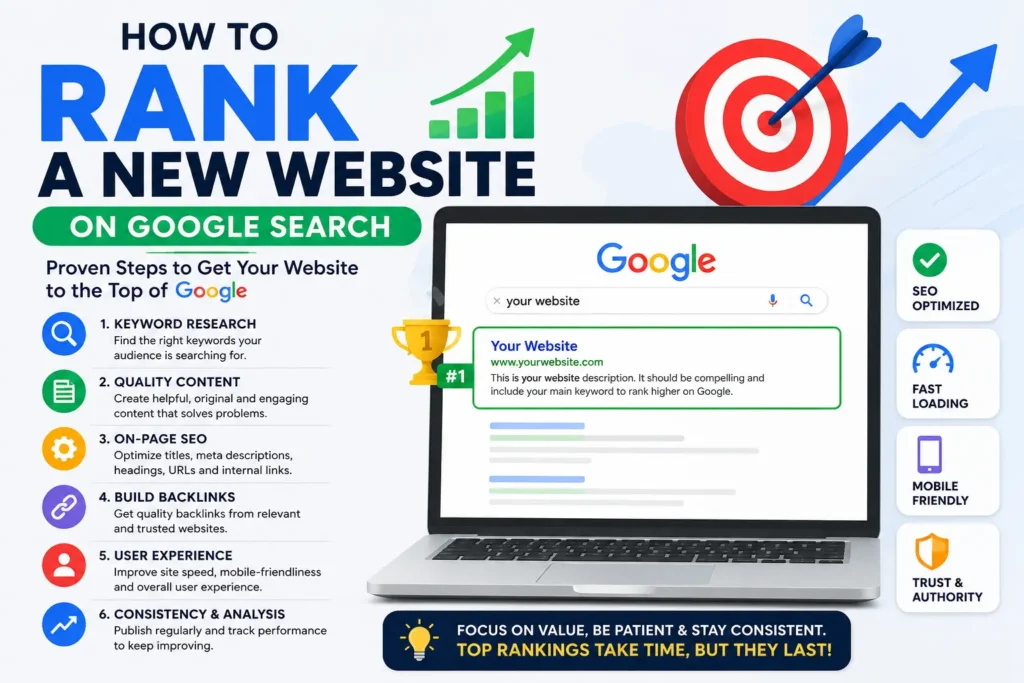
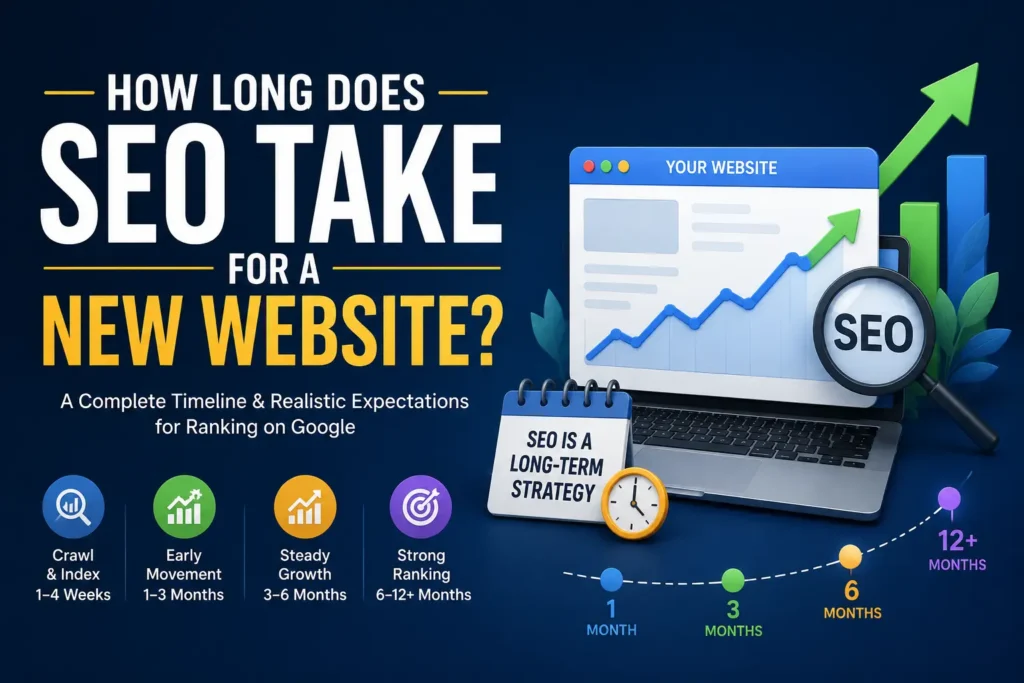
One of the most common questions new website owners ask is “How Long my website will take to rank in Google”? It’s an obvious concern that keeps bothering many of them as they invest their valuable time and money to build the website and hence want it to rank at the earliest. But wait! It’s not an easy task. SEO is not a magic trick that it will push your website to the top of search ranking overnight. The truth is, SEO is a long-term strategy and it takes time to brew proven results. So it’s essential to understand the actual timeline of Search Ranking Factors to set proper expectations and avoid disappointment.
In our previous article, we had explained How to Rank a New Website on Google and today we shall shed light on How long does SEO take for a new website and the factors that influence this timeline to brew proven outcomes. Let’s start.
3 to 6 Months: A Minimum Timeframe
So “How Long Does SEO Take for a New Website”? If you want to know the minimum duration, then the honest answer is at least 3 to 6 months. Most websites take at least this much time to appear in search results. But there are several other factors like content quality, industry, content niche, technical SEO setup and link-building efforts that impact this timeframe. While some website from less competitive niche rank within just three to six months, others working in high competitive categories might take more than nine to twelve months to get their place in search rankings.
Why Ranking Factors take Time
This is a simple yet non-ignorable question. When Google first discovers your website or you ping Google for indexing, it doesn’t instantly rank your website for the target keywords. Rather, it starts crawling your pages, index your content, analyze the website’s authority and tries to understand how well its content matches user search intent. This process can’t be completed in a haste as Google is too strict about policies and user-first content.
Key Factors that Influence SEO Timeline
Now before moving into the month-by-month breakdown of discovery phases, we shall try to explain what are the key factors that affect SEO timeline. Let’s have a look.
Domain Age and Authority
The Domain age is an important factor in Google’s eyes for ranking. Your website starts with zero DA and takes time to build authority. Google keeps prioritizing the old domains in your niche while your domain still keeps building authority. It all goes in a first come, first serve method. The duration is bit long for brand new domains while established websites with existing domain authority rank faster.
Industry Niche
Deciding the niche before building an website is a prim factor. If your website belongs to a low-competitive niche then there are chances of it ranking faster. But if your website operates in a competitive niche like legal, finance, news etc. then it often takes much time to rank as highly competitive keywords often take several months to rank.
Content Quality
As we often say, content is the king, Google also relies on this factor. Google always gives priority to websites covering people-first content rather than website creating content for bots and search engines. So focusing on original, high quality content that really finds answers to the queries of users significantly reduces your overall timeline to appear in search results.
Technical SEO Optimization
Technical optimization plays a primary role for faster ranking in search pages. A well-optimized website with proper site structure, fast loading pages, and mobile responsiveness will rank much faster than a poorly optimized website. Proper Technical optimization is one of the most important factors of Google Search Ranking.
High Quality Backlinks
One backlink from an authoritative website is considered as a vote of trust. The more links you gain from established websites enhances your chances of getting visible in search faster than those without any valid backlink profiles. So always consider strengthening your backlink profile for better search ranking.
Regular Updates
Publishing fresh, relevant content regularly signals Google that your website is relevant and is updated regularly. So it must be given priority. Occasional posting reduces your chances of search appearance.
Month on Month Growth
Because we explained the important factors that influence your SEO Timeline, now we shall explain the month-by-month breakdown for a new website to appear in search.
Discovery Phase
The very first phase is the discovery phase in which the users need to ensure that Google discovers and indexes your website. This is ideally the first two months when the users need own Google’s trust by creating genuine content, submitting the sitemap to search console and building internal site structure. During this period, you might get very little traffic.
Initial Phase
Second phase is the Initial Phase which is around the third and fourth months. This is the time when Google starts indexing most of your website pages, might rank your website for less competitive and long-tail keywords and you might see some movement in your Analytics. Though not much, but you must witness some organic traffic.
Growth Phase
Around fifth month, your website should start showing noticeable results. During this period, your website might start appearing in second or third pages of Google search for your target and supporting keywords, even in the first page at times. But there should be a considerable enhancement in Organic Search Traffic.
Establishment Phase
This is the Establishment period. After six months, if your efforts remain constant as per the guidelines given above, then your website might see steady improvements. Though not all, but it can start ranking in the first page for few competitive keywords and their supportive key phrases.
How to Optimize Your New Website’s SEO
Now you have understood how important it is to optimize your new website’s SEO for search engine algorithms. But now we will take you through the steps to do it.
Step 1: Technical SEO
- Configure Google Search Console and Bing Webmaster Tools
- Generate and submit xml sitemap
- Improve Page Speed and Mobile Responsiveness
- Fix crawl errors and optimize your site structure
- Enable SSL/HTTPS security
Step 2: Keyword Research
- Find keywords with good search volume
- Target long-tail keywords
- Identify Competitor Keywords
- Create keyword mapping strategy
Step 3: People-First Content
- Develop in-depth people focused content
- Long-Form Content
- Optimize content for your main & secondary keywords
- Create humanized content
- Avoid keyword stuffing
- Add in pictures and clips and media relevant
Step 4: On-Page SEO
- Improve title tags and meta descriptions
- Use proper heading hierarchy (H1, H2, H3)
- Use descriptive urls
- Add internal links wisely
- Alt Text for Image Optimization
Step 5: Generate Backlinks
- Create shareable assets (research, tools, guides)
- Contact relevant blogs and websites.
- Guest posting on reputable sites in your niche
- Build relationships with the industry influencers
- Track your competitor’s backlinks
Step 6: Regular Updates
- Develop an editorial calendar
- Post content regularly (at least weekly)
- Refresh current content to make it new
- Create topical clusters around pillar topics
Step 7: Data Analysis
- Monthly keyword ranking tracking
- Monitor natural traffic trends
- Analyze engagement metrics and user behavior .
- Identify content that isn’t performing well
- Adapt your approach with data-driven insights
Conclusion
So now after this analysis we came to know how long does SEO take for a New Website. To rank a new website it takes at least three to six months. If you are thinking of ranking it before the said duration by any means, then it’s almost impossible. If someone promises you to rank your newly website within the said timeframe, then know it’s a false commitment. Google never goes beyond its algorithms to rank any website faster. So to get success, you need to follow the said guidelines and have adequate patient. Just know, there in no shortcut to success in Search Engine Optimization.
For technology insights AI updates, SEO guides stay connected with Rank Blend. Follow us on Facebook, X and Instagram for daily updates.